

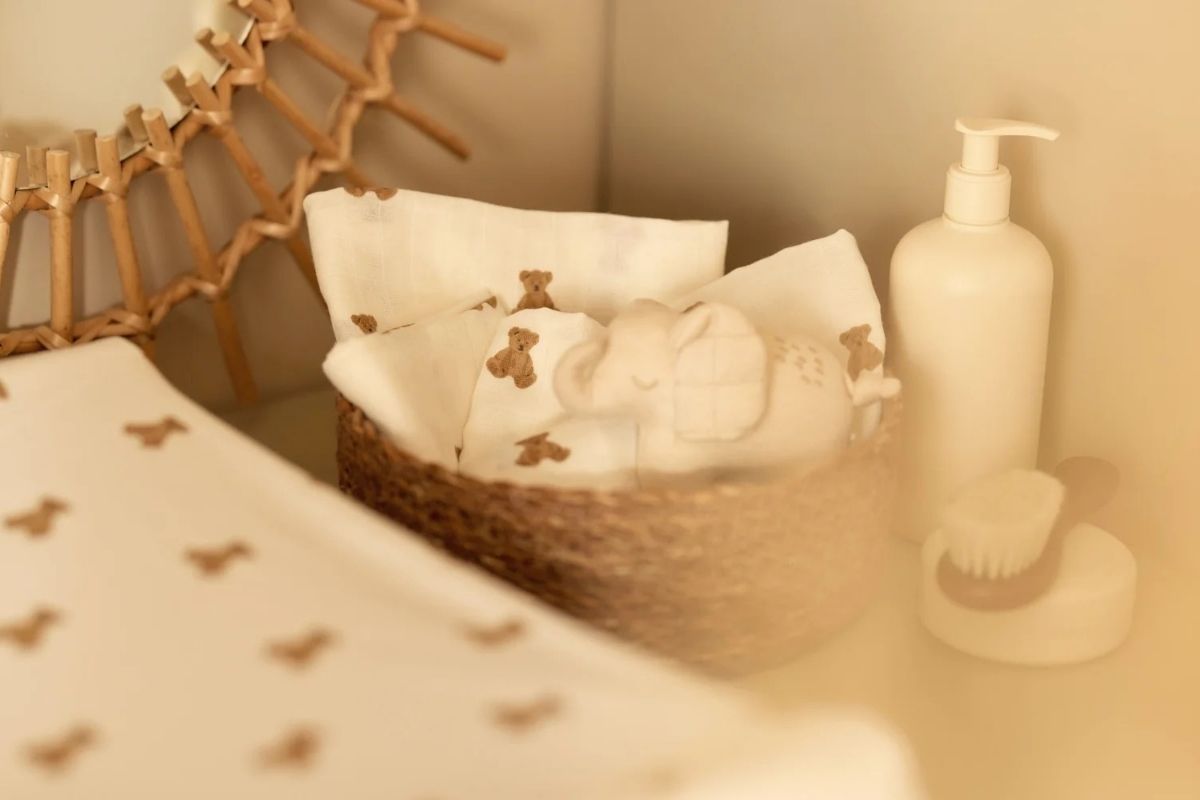
In short: A newborn needs less than long shopping lists suggest: a safe place to sleep with a firm mattress, a baby sleeping bag, nappies and a changing mat, basic bath products, 6–8 bodysuits and sleepsuits, an infant car seat for the trip home from hospital, and a pram. Pillows, cot bumpers and baby nests do not belong in the cot.
By Eva Birsa, mum and co-founder of Evitas · Updated: 27 September 2026
How to use this checklist
We have split baby gear into three groups: essential (needed from day one), recommended (makes life easier, can be bought later) and not needed (not recommended or an unnecessary expense). Much can be handed down or bought second-hand – the exceptions are the car seat and the mattress, whose history you don't know.
Newborn essentials: table by area
| Area | Essential | Recommended | Not needed |
|---|---|---|---|
| Sleep | cot or Moses basket, firm flat mattress, 2–3 fitted sheets, 2 sleeping bags with a suitable TOG rating | room thermometer, travel cot, baby monitor | pillow, duvet, cot bumpers, baby nests, sleep positioners, soft toys in the cot |
| Changing | newborn nappies, changing mat, wipes or cotton wool and water, nappy cream | nappy bin, 5–10 muslin squares | wipe warmer; a changing table if you have a sturdy chest of drawers at the right height |
| Bathing and care | baby bath, 2 hooded towels, gentle wash or bath oil, baby nail scissors or file | bath thermometer, baby thermometer, nasal aspirator | large skincare ranges, perfumed products |
| Feeding | breastfeeding: nursing pads, 2–3 muslins; formula: 4–6 bottles, teats, bottle brush | nursing pillow, breast pump, steriliser | high chair (not needed until around 6 months), formula prep machine if you breastfeed |
| Clothes | 6–8 bodysuits, 6–8 sleepsuits or outfits, 2 hats, socks, a going-home outfit | scratch mittens, knitted cardigan, snowsuit for cold months | lots of newborn-size (50) clothes (quickly outgrown), hard-soled shoes, clothes with cords |
| Out and about | i-Size infant car seat for the trip home from hospital, pram with a carrycot or lie-flat seat | changing bag, pram footmuff, baby carrier | second-hand car seat of unknown history, thick padding or coat under the harness |
| Play | nothing – in the first weeks your face, voice and touch are enough | play mat, high-contrast cards or toys, rattle | electronic toys, lots of toys in the first months |
Sleep: a safe sleep space is the most important purchase
According to the NHS and The Lullaby Trust, a baby should sleep on their back, on a firm, flat mattress with a waterproof cover, in their own cot or Moses basket, in the same room as you for at least the first 6 months. Keep the cot clear of pillows, duvets, cot bumpers, nests, positioners and soft toys. Keep the room between 16 and 20 °C.
- Cot or crib: browse cots and cribs; a travel cot is handy for visits to grandparents.
- Mattress: firm, flat and with no gaps at the edges – see our guide How to choose a cot mattress and the cot mattresses collection.
- Sleeping bag instead of a blanket: it can't slip over the face and keeps a steady warmth. Which TOG to choose for your room temperature is explained in our baby sleeping bag TOG chart; shop sleeping bags.
Changing
According to the NHS, young babies may need changing as many as 10 to 12 times a day, so stock up for the first week and then buy as you go once you know which size and brand suit you. A stable changing mat is essential; a changing table isn't if you have a chest of drawers at the right height. More: Changing mat buying guide and Changing table checklist. Shop nappies and wipes and muslin squares.
Bathing and care
There's no need to bath your baby every day – 2 to 3 times a week is enough in the first weeks. You'll need a baby bath, soft hooded towels and gentle, fragrance-free baby skincare. Water temperature, safety and step-by-step tips are in our guide Bathing a baby. Add a thermometer and a nasal aspirator to your care kit.
Feeding
If you plan to breastfeed, you need very little at first: nursing pads (see Reusable or disposable nursing pads), a few muslins and, if you like, a nursing pillow. A breast pump can wait until you know whether you need one.
For formula or combination feeding you'll need bottles with teats, a brush and a way to sterilise (sterilisers and bottle warmers). More in our Formula feeding guide and LOVI Mammafeel bottle guide for breastfed babies who sometimes take a bottle.
Clothes
Newborns grow fast, so buy just a few pieces in size 50 (newborn) and more in 56–62 (see our baby clothes size chart for the approximate age per size). Envelope-neck or side-opening bodysuits and zip-up sleepsuits are the most practical. Dress your baby in layers so you can add or remove one easily, and make sure they don't overheat in the cot. Shop clothing and baby socks.
Out and about: a car seat for leaving hospital, and a pram
You need a car seat from day one – for the drive home from hospital. For a newborn, choose an i-Size infant carrier (from 40 cm), fitted rear-facing. Install and practise before your due date, and tighten the harness over thin clothing, not over a coat or thick blanket. The infant carrier is for travelling, not for sleep: once home, move your baby to a flat surface.
A pram for a newborn should have a carrycot or a seat that reclines fully flat. 3-in-1 travel systems let you click the car seat onto the chassis. Browse prams and pushchairs, 3-in-1 travel systems and our comparison UPPAbaby Vista V3 vs Cruz V3. A changing bag helps on outings, and a footmuff in winter.
Play
In the first weeks babies don't need toys. Once they spend longer awake watching the world, high-contrast toys and a play mat for supervised tummy time are welcome (see our baby play mat guide).
When to buy baby gear?
It makes sense to have most things at home by around week 36 of pregnancy. That's also the time to pack your hospital bag and fit the car seat.
Frequently asked questions
How many bodysuits does a newborn need?
Roughly 6–8 bodysuits and 6–8 sleepsuits, depending on how often you do laundry. Buy most in size 56–62, as size 50 is quickly outgrown.
Do I need a cot bumper?
No. The NHS and The Lullaby Trust advise against bumpers, pillows, duvets and nests in the cot because they increase the risk of SIDS. A firm mattress and a fitted sheet are all you need.
Can I buy a second-hand car seat?
We advise against it if you don't know its history: after a crash it can be damaged even if the damage isn't visible. A second-hand pram, cot and clothes are fine.
Do I need a changing table?
Not necessarily. A stable surface at the right height with a changing mat is enough. Never leave your baby alone on a changing surface.
What do I need to bring my baby home from hospital?
A fitted i-Size infant car seat, a going-home outfit, a hat and a blanket to tuck over the harness. More in our hospital bag checklist.
Sources
- NHS – Reduce the risk of sudden infant death syndrome (SIDS)
- The Lullaby Trust – Safer sleep advice
- The Lullaby Trust – Product guide: safer sleep essentials
- The Lullaby Trust – Car seats
- NHS – How to change your baby's nappy
- NHS – Pack your bag for labour
This content is for information only and does not replace advice from your paediatrician or health visitor.



