

In short: According to the European paediatric society ESPGHAN, solid foods should be introduced no earlier than 17 weeks and no later than 26 weeks (between 4 and 6 months), and most babies are ready around 6 months. Look for the signs of readiness: your baby holds their head steady, sits with support and shows interest in food. Start with one meal a day and small amounts, and keep breastfeeding or formula feeding. There is no need to delay allergens, but avoid honey and cow's milk as a main drink until 1 year.
Author: Eva Birsa, mum and co-founder of Evitas · Updated: 27 Sep 2026
When is your baby ready for solid food?
ESPGHAN recommends that weaning should not start before 17 weeks (4 months) and should not be delayed beyond 26 weeks (6 months). Most babies are ready around 6 months. Your baby's development matters more than the calendar:
- holds their head steady and sits with support,
- watches you eat with interest and opens their mouth,
- tries to grab food and bring it to their mouth,
- no longer automatically pushes food out with their tongue.
Purées or baby-led weaning (BLW)?
| Spoon-fed purées | BLW – baby feeds themselves | |
|---|---|---|
| What it is | mashed or puréed food offered by an adult | soft pieces of food that baby picks up on their own |
| Benefits | easier to track amounts, quicker introduction of iron | encourages independence, fine motor skills and a variety of textures |
| What to watch for | move gradually to thicker and lumpier textures | baby must sit unaided; pieces should be soft and finger-shaped |
| Best for | most families as a starting point | babies who already sit well (usually from 6 months) |
Many families combine both: spoon-fed purées alongside soft finger foods to explore. What matters is that by 8–9 months your baby also gets used to lumpy textures.
The first weeks: how to start
- One meal a day, usually lunch, when baby isn't too hungry or tired.
- 1–3 teaspoons to begin with; increase the amount gradually.
- Start with vegetables: carrot, courgette, cauliflower, broccoli, potato. This helps baby get used to less sweet flavours too.
- Offer a new food for a few days in a row before introducing the next one, so you can spot any reaction more easily.
- Don't force it. Some foods need to be tried 8–10 times before baby accepts them.
Weaning plan month by month
| Age | Solid meals | What to offer |
|---|---|---|
| 5–7 months | 1 (lunch) | vegetable purée, then vegetables with potato and meat |
| 6–8 months | 2 (lunch, dinner) | cereal with milk for dinner; well-cooked egg and fish |
| 7–9 months | 3 (+ fruit and cereal snack) | apple, pear, banana with cereals; lumpy textures |
| 10–12 months | 5 (3 main meals + 2 snacks) | gradual move to adapted family food |
Milk (breast milk or formula) remains an important part of your baby's diet throughout the first year. Offer a few sips of water from a cup with every meal.
Gluten and allergens
- Gluten: according to ESPGHAN, it can be introduced any time between 4 and 12 months. Timing does not prevent coeliac disease, but avoid large amounts in the first weeks and increase gradually.
- Egg, fish and other allergens: delaying them does not prevent allergies. Introduce them gradually once weaning has started and watch for any reaction.
- Higher-risk babies (severe eczema, a known allergy): talk to your paediatrician before introducing allergens.
What babies shouldn't eat before 1 year
- Honey – it can contain spores of the Clostridium botulinum bacterium.
- Cow's milk as a main drink – small amounts in cooking or cereal are fine.
- Added salt and sugar, and sugary drinks.
- Whole nuts, peanuts, whole grapes and cherry tomatoes – a choking hazard. Offer nuts ground or as nut butter, and cut grapes lengthways into quarters.
Feeding safety
- During meals your baby should sit upright and strapped in a high chair – never lying down or in the car.
- Never leave them alone while they eat.
- Gagging is normal – it's a reflex that helps baby learn. Choking is silent and needs immediate action, so a baby first aid course is a great investment for parents.
Products that make weaning easier
- High chair with a footrest so baby sits steadily, e.g. Cybex LEMO, Cybex Click & Fold, Nuna Bryn or Anex Ozy.
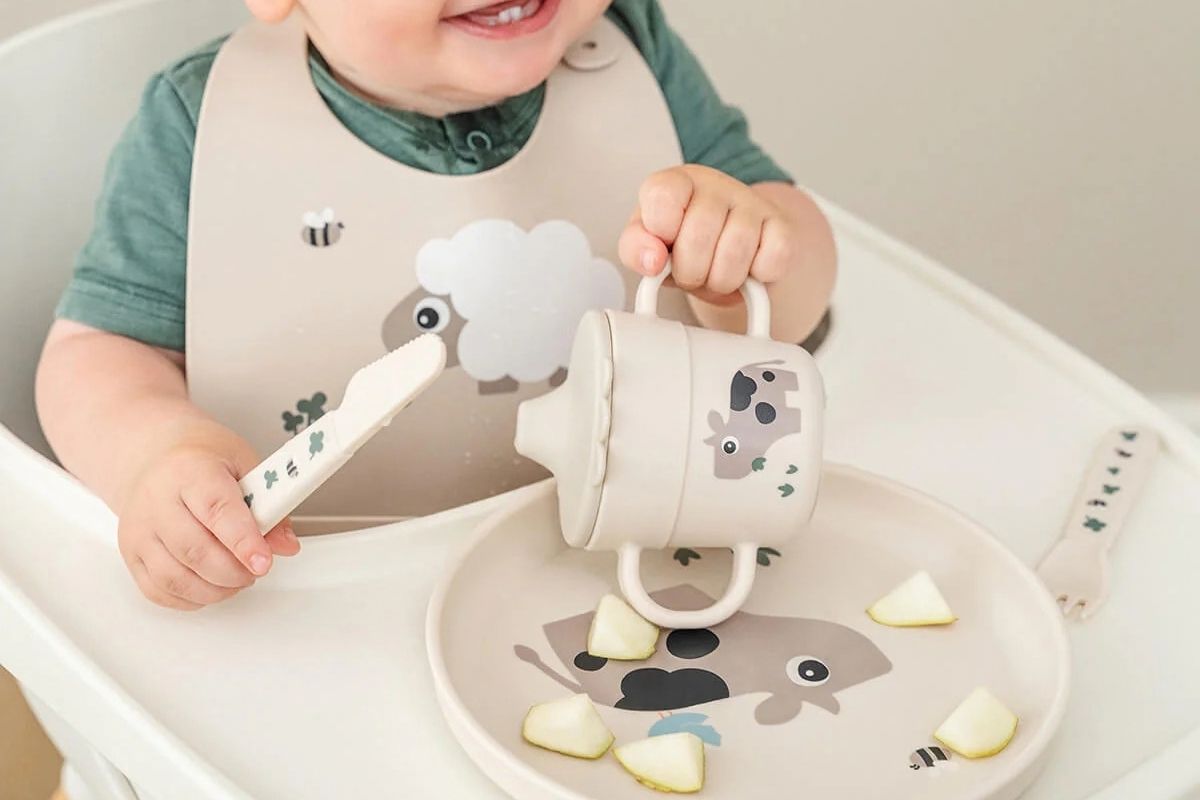
- Plates and bowls with suction bases that baby can't tip over, e.g. silicone plates from Mushie and Done by Deer.
- Soft weaning spoons for first purées, plus cutlery for self-feeding.
- Sippy or open training cup for water at mealtimes.
- Placemats and pocket bibs for less mess with BLW.
Find everything in one place in our feeding category or in our feeding sets.
Frequently asked questions
When should I start weaning?
According to ESPGHAN, not before 17 weeks and not later than 26 weeks, once your baby shows signs of readiness. Most babies are ready around 6 months.
What foods should I start with?
Usually a vegetable purée (carrot, courgette, cauliflower), then add potato and meat. Iron-rich foods are important.
How much should my baby eat at first?
1–3 teaspoons per meal. At the start it's mainly about discovering flavours – milk is still the main source of nutrients.
When should I introduce gluten?
According to ESPGHAN, between 4 and 12 months, in small amounts and gradually.
Is baby-led weaning safe?
Yes, as long as your baby sits unaided, the food is soft and the right shape, and an adult is always there. Avoid hard and round foods.
Does my baby need water once they start solids?
Yes, offer a few sips of water from a cup with every meal. Sugary drinks aren't suitable.
Read also: Formula milk safety: what parents need to know today, High chair buying guide: how to choose and when to start and Brushing children's teeth: when to start and how much toothpaste.
Sources
This content is for information only and does not replace advice from your paediatrician or health visitor.



