

In short: Breast engorgement is common on days 2–5 after birth, when your milk comes in. What helps most: frequent, responsive feeding and a good latch, cold packs between feeds, a gentle touch instead of deep massage, and expressing only enough to feel comfortable. Fever, chills, spreading redness or feeling unwell for more than 24 hours are reasons to see a doctor.
Author: Eva Birsa, mum and co-founder of Evitas · Updated: 12 October 2026
Engorgement, blocked duct or mastitis? How to tell them apart
A hard, tight, painful breast while breastfeeding can have different causes. The Academy of Breastfeeding Medicine (ABM) protocol from 2022 describes them as a spectrum: from normal engorgement and narrowed milk ducts to inflammation and rare complications such as an abscess. One important change: a “blocked duct” is not a plug to be squeezed out but inflammation and swelling of the tissue around the ducts. That is why current advice is less pressure, less heat and less pumping than in the past.
| Condition | Typical signs | What helps | When to see a doctor |
|---|---|---|---|
| Normal engorgement (days 2–5) | Both breasts full, heavy, warm; areola tight, baby finds it harder to latch | Frequent responsive feeding, cold packs between feeds, hand express a few drops before a feed to soften the areola | If your baby cannot feed or the discomfort gets worse despite feeding |
| Blocked duct (narrowed milk duct) | A tender lump or area in one breast, no fever | Keep feeding from the affected side, check the latch, cold packs, gentle lymphatic drainage, no kneading | If it does not improve within 24–48 hours or fever and redness appear |
| Mastitis | Red, hot, painful area; fever, chills, flu-like symptoms | Keep breastfeeding, cold packs, rest, fluids | With fever or if symptoms last more than 24 hours – see a doctor |
| Abscess (rare) | A painful, swollen lump that does not shrink, may develop from untreated inflammation | Medical care only | Straight away |
What helps with breast engorgement
1. Feed often and responsively
Feed your newborn whenever they show hunger cues, 8–12 times a day or more. Do not limit feed length and do not skip night feeds. If the areola is too firm, hand express a little milk before the feed so it softens and your baby can latch deeply. A midwife, health visitor or lactation consultant (IBCLC) can help with positioning and attachment.
2. Cold packs between feeds
Cold reduces swelling and pain. Apply a cold pack after or between feeds for about 10–20 minutes. ABM and NHS guidance both list cold compresses as the first choice for swelling and inflammation.
3. Heat only briefly and only before a feed
Prolonged heat (hot showers, hot-water bottles) can make swelling and inflammation worse. The NHS allows brief warmth just before feeding or expressing if it helps your milk flow. If you feel worse after warmth, stop and stick with cold.
4. Gentle touch instead of deep massage
According to the ABM, firm kneading or trying to squeeze out a “plug” does not help and can damage tissue. Instead, try lymphatic drainage: with flat fingertips, stroke the skin very lightly from the nipple towards the armpit and collarbone.
5. Express only enough to be comfortable
“Emptying” the breast with a pump stimulates even more milk production and another round of engorgement. If your baby cannot feed or you are apart, express about what your baby would drink, or just enough to relieve the pressure.
6. A comfortable bra without pressure
Choose a supportive, well-fitting bra that does not dig in. Tight bras and clothing can put pressure on the breast.
Products that can make these days easier
- Canpol babies® Warm-cold therapeutic gel packs 2 pcs – ergonomic shape with an opening that hugs the breast and a soft textile back. Chill them in the fridge or freezer and use them between feeds for swelling; use warming only briefly before a feed if it helps you. Always follow the manufacturer’s instructions.
- Canpol babies® Nursing and Pumping Bra Mum fit – wire-free, made of soft stretchy fabric, with easy opening for feeding.
- Canpol babies® Manual breast pump Basic Light – for occasionally expressing a small amount when your baby cannot feed or to soften the areola.
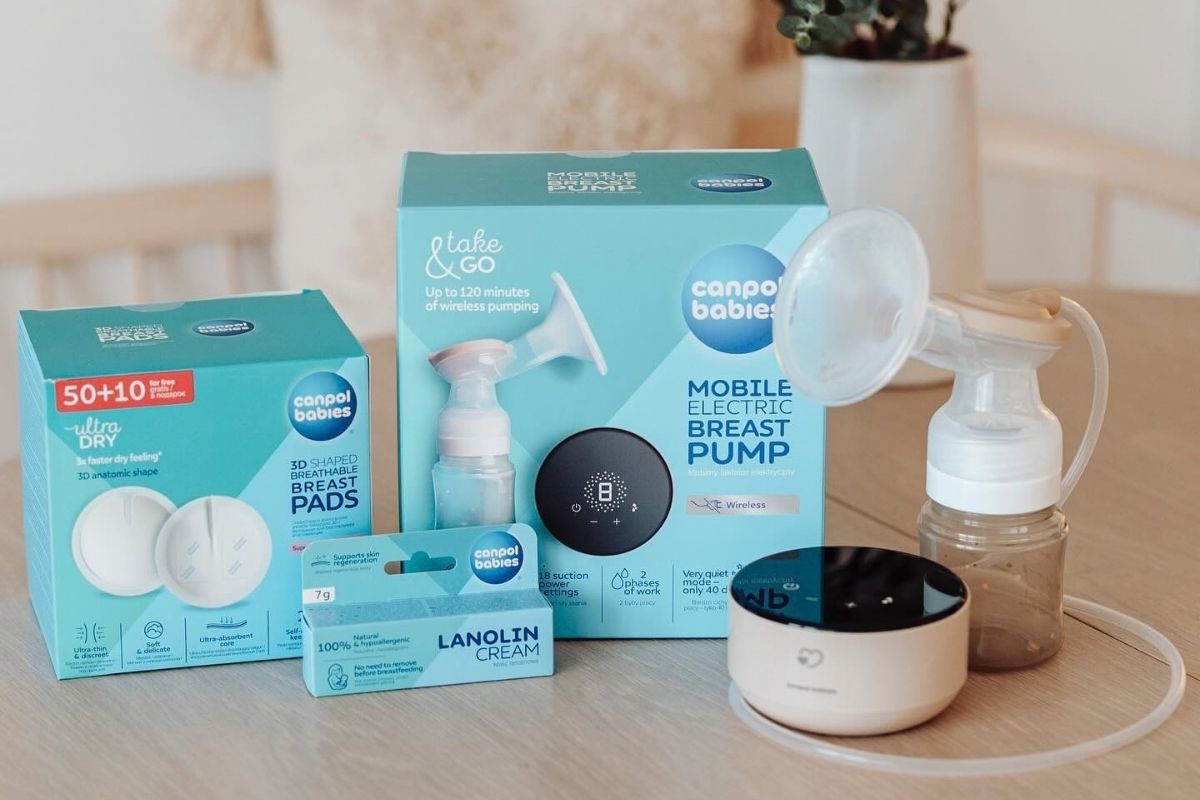
- Canpol babies® 3D anatomically shaped breast pads – for leaking between feeds, with a breathable top layer.
Find more in our Breastfeeding, Breast pads, Breast pumps and Canpol babies collections.
Warning signs: when to see a doctor
- a temperature of 38 °C or higher, chills, aching muscles (flu-like symptoms),
- spreading redness or a hot, very painful area on the breast,
- symptoms do not improve within 12–24 hours of self-care, or get worse,
- a lump that does not shrink, pus or blood from the nipple,
- feeling very unwell or a racing heart – seek urgent care.
Only take medicines (including for pain and fever) after talking to a doctor or pharmacist who knows you are breastfeeding.
Frequently asked questions
Warm or cold: which is better for breast engorgement?
Cold for swelling and pain, between feeds. Warmth may help only briefly, just before a feed, to get the milk flowing. Prolonged heat can increase swelling.
Should I pump with a blocked duct?
Only enough to be comfortable, or as much as your baby drinks. Pumping “until empty” drives oversupply and repeated blockages. More on choosing a pump: How to choose a breast pump.
Do cabbage leaves really help?
A Cochrane review (2020) found that chilled cabbage leaves may ease pain a little, but the evidence is weak. The ABM notes they are not more effective than ice or cold packs. If you use them, make sure they are clean, chilled and on unbroken skin.
Can I breastfeed with mastitis?
Yes. According to ABM and NHS guidance, mastitis is not a reason to stop breastfeeding and the milk does not harm your baby. Stopping suddenly can make things worse. If feeding on the affected side is very painful, feed from the other side and express from the affected side only enough to be comfortable.
How long does breast engorgement last?
Normal engorgement is temporary and with frequent feeding usually settles within a few days as your supply adjusts to your baby. If it lasts longer or you develop a fever, speak to a health professional.
Does massage help a hard breast?
Deep massage does not. Very gentle lymphatic drainage towards the armpit does. Firm pressure can increase swelling and damage tissue.
Read also
- Sore, cracked nipples when breastfeeding: causes and what helps
- Storing breast milk: how long it lasts in the fridge and freezer
- Postpartum essentials: what you need after birth
- Combination feeding: breast and bottle without the confusion
Sources
- Academy of Breastfeeding Medicine: Clinical Protocol #36 – The Mastitis Spectrum (2022)
- NHS: Breast pain and breastfeeding (engorgement, blocked ducts)
- NHS: Mastitis
- La Leche League International: Mastitis
- Cochrane (2020): Treatments for breast engorgement during lactation
This content is for information only and does not replace advice from a doctor, midwife or lactation consultant.



