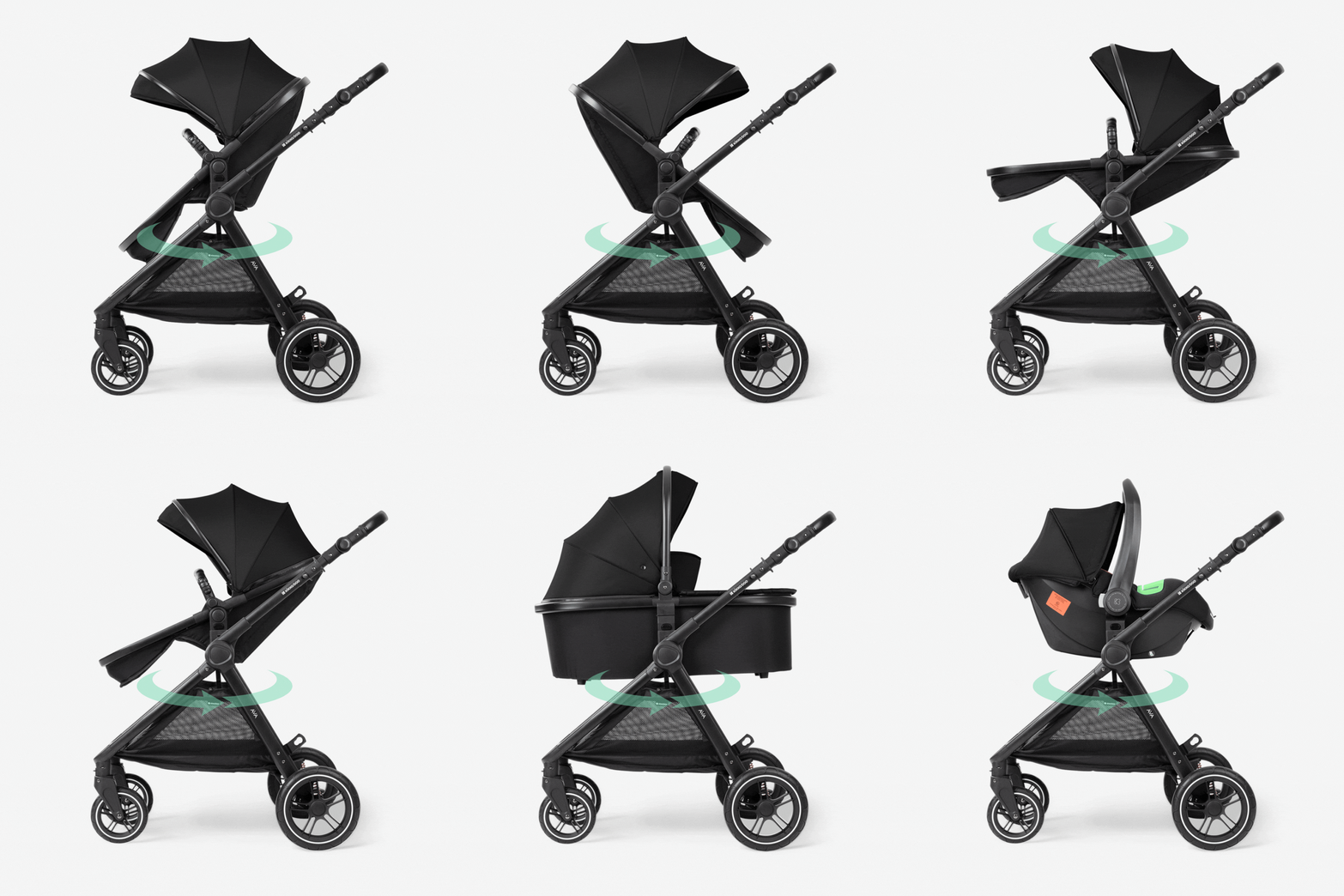
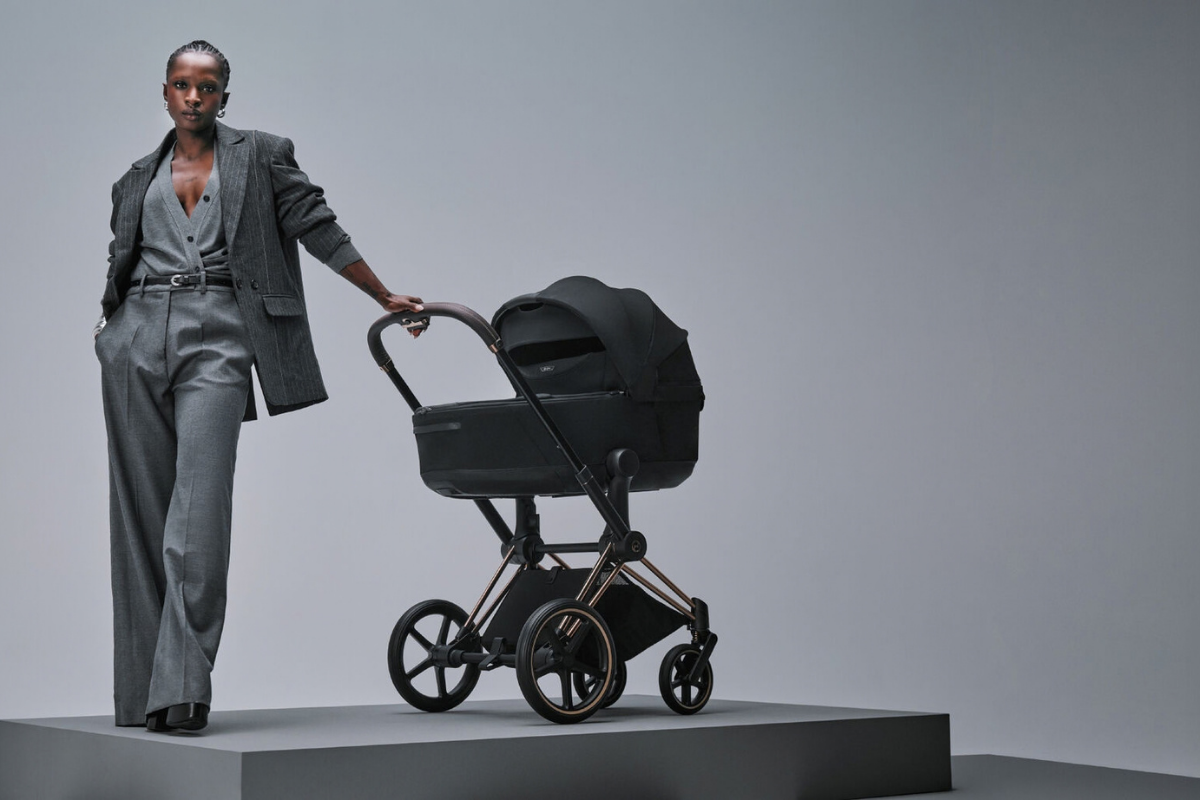
In short: Three questions guide you when choosing a baby stroller: how old your child is, where you will use the stroller most, and how much space you have in the car and at home. A newborn needs a carrycot or a seat unit that provides a lie-flat position (2-in-1, 3-in-1 or 4-in-1), while an older child who already sits up on their own is fine with a compact sports stroller or an umbrella stroller. For twins or two children close in age, choose a stroller with two seats or interchangeable seat units.
Author: Eva Birsa, mum and co-founder of Evitas – Updated: 5 October 2026
What determines the choice of stroller?
Before you start comparing models, answer a few simple questions. They matter more than the brand or the colour.
- Child's age: a newborn needs a lie-flat position, while an older child needs a seat unit you can adjust.
- Where you will go: city pavements, the park and forest trails, or mostly day trips and travel.
- Car and home: how much boot space you have and how heavy the stroller is if you carry it up the stairs.
- Number of children: one, twins, or two children close in age.
- Accessories: whether you will buy a car seat that fits on the same stroller, and what else you need for winter or rain.
Types of baby strollers: 2-in-1, 3-in-1, 4-in-1, umbrella and others
The labels 2-in-1, 3-in-1 and 4-in-1 tell you how many parts you get in one set. The table below helps you understand the differences.
| Type | What you get | Who it is for |
|---|---|---|
| 2-in-1 strollers | Frame and a soft portable carrycot for a newborn | For use from birth; the sports seat is bought later |
| 3-in-1 strollers | Frame, newborn carrycot and car seat in one set | For parents looking for a coordinated solution from birth without buying parts separately |
| 4-in-1 strollers | Frame, sports seat, carrycot and car seat with an Isofix base | A stroller that grows with your child from the first days to the toddler years |
| Stroller sets | Frame, carrycot, sports seat and, if needed, a car seat and Isofix base | For those who want everything at once in one coordinated choice |
| Lightweight umbrella strollers | A compact, easy-to-fold stroller | For children who already sit up on their own (roughly from 6 months), for trips and travel |
| Strollers without a carrycot | A compact frame with an adjustable seat unit; some models accept a car seat | For everyday walks and travel |
| Twin strollers | Two seats, side by side or in tandem | For twins or two children you push at the same time |
| Strollers for a small age gap | Interchangeable seat units that you adapt to your family's needs | For parents of two children who are close in age |
Watch the video
Sports, travel, all-terrain and double strollers: which one and when
Sports stroller
A sports stroller (sometimes also called a buggy) has only a seat unit. Some models have a seat that reclines into a fully lie-flat position, and the manufacturer designates them as suitable from birth; others are intended for children from about 6 months, when they can sit steadily. Examples: Cybex Beezy (from birth, approx. 8.5 kg) and Cybex Eezy S Twist+2 with a seat that rotates 360°.
Lightweight travel stroller
Lightweight (umbrella) strollers weigh around 6 kg and fold very small, some even to the size of airplane hand luggage. They are great for the city, public transport and travel, but less so for long walks on uneven paths, as they have smaller wheels. Examples: Cybex Orfeo (approx. 6.3 kg, from birth), Cybex Libelle (approx. 6 kg, from 6 months), Cybex Agis (6.3 kg, from approx. 6 months), Cybex Melio Carbon (5.9 kg) and Joolz Aer. All in the lightweight umbrella strollers collection.
All-terrain stroller
An all-terrain stroller has larger puncture-resistant wheels and suspension, so it rides more smoothly on gravel, forest trails and cobblestones. It is somewhat heavier and larger when folded. Example: Cybex Talos S Lux (all-terrain suspension, 12.5 kg, soft newborn carrycot included in the set) and Cybex Balios S Lux with all-terrain wheels.
Stroller for twins and siblings
For twins or children with a small age gap, choose a stroller that takes two children. Cybex Gazelle S offers 23 configurations for one or two children (the second seat unit or carrycot is sold separately); similar solutions are Nuna Demi Next and Joie Evalite Duo. Take a look at twin strollers, strollers for a small age gap and additional sports seats.
Stroller for a newborn: the lie-flat position matters
In the first months, a baby needs a fully lie-flat position and protection from wind and sun. This is provided by a stroller carrycot, which you attach to the frame with a click system or adapters. That is why 2-in-1, 3-in-1 and 4-in-1 strollers, which include the carrycot in the set, are the most popular choice for newborns.
A car seat (infant carrier) is intended for travelling in the car. If you choose a 3-in-1 or 4-in-1 stroller, you will have a car seat that you can attach directly to the stroller frame. For newborns, i-Size infant carriers for children from 40 to 87 cm are suitable. A child should not sleep in a car seat for longer than necessary for the journey; for long sleeps, use a carrycot or a cot.
What to check when choosing a model?
- Weight and folding: try folding the stroller with one hand and lifting it. If you carry it up the stairs or load it into the car every day, a lighter model is a big advantage.
- Folded size: compare the folded dimensions of the stroller with the size of your boot.
- Wheels and suspension: for uneven paths and forest trails, choose larger wheels with good suspension; for the city, more compact ones are enough.
- Adjustable handle and seat: the handle should be height-adjustable for the parents, and the seat should offer several positions.
- Weight capacity and age: for selected models the weight capacity is stated (e.g. up to 22 kg); check it against your child's expected growth.
- Car seat compatibility: if you intend to use a car seat on the stroller, check which car seats fit (some models need adapters).
The EN 1888 standard: what it means
The European standard EN 1888 sets out safety requirements and test methods for baby strollers:
- EN 1888-1:2018+A1:2022 applies to strollers and carrycots for children up to 15 kg (for each child).
- EN 1888-2:2018+A1:2022 applies to strollers for children over 15 and up to 22 kg.
- EN 1888-3:2024 applies to sports strollers for heavier children, intended for sports activities such as running.
You will find the standard stated in the instructions for use or on the stroller's label. Since many strollers carry a child of up to 22 kg, check that the weight capacity matches the manufacturer's information, and never exceed the maximum permitted weight of the child or of the shopping basket.
Stroller and car seat: the infant carrier on the frame
With combination 3-in-1 and 4-in-1 strollers, you can attach the car seat infant carrier (car seats 40–87 cm) to the stroller frame using adapters. This is handy for short errands, such as a doctor's visit or a trip to the shop, as you do not have to move a sleeping baby.
However, the infant carrier is not a place for long walks or sleeping. Manufacturers advise limiting the time spent in the car seat. Maxi-Cosi recommends that a baby should not be in the car seat for more than two hours at a time, and the British organisation The Lullaby Trust advises moving the baby onto a flat, firm surface as soon as you reach your destination. Always follow the manufacturer's instructions for your infant carrier, and use a carrycot for longer walks. Read more about choosing a car seat in the guide to choosing a child car seat.
Stroller accessories
When choosing a stroller, also think about accessories: car seat adapters, a rain cover, mosquito nets, a parasol, a liner and a cup holder. In the colder part of the year, winter footmuffs for strollers are useful, protecting the baby from cold, wind and damp.
Stroller brands in the Evitas range
- Cybex: the GOLD line for everyday use, the premium Platinum line (Priam, e-Priam, Mios, Coya), Balios S Lux and Gazelle S for one or two children.
- Nuna, Joie, Anex, KikkaBoo, UPPAbaby, Mast and Joolz.
You can see the full range among our baby strollers, where you can filter by type, brand and the child's age.
Frequently asked questions about choosing a stroller
Which stroller should I choose for a newborn?
For a newborn, choose a stroller that has a carrycot or a seat unit with a lie-flat position, that is, a 2-in-1, 3-in-1 or 4-in-1. A 3-in-1 or 4-in-1 stroller also gives you a car seat at the same time.
When should I switch to a sports seat?
A sports seat is suitable for children who already sit up on their own, that is, roughly from about six months of age. 4-in-1 strollers and sets already include a sports seat.
Is a 3-in-1 stroller better than a 2-in-1?
Besides the carrycot, a 3-in-1 also gives you a car seat in the same set, so you do not have to buy it separately. A 2-in-1 is suitable if you already have a car seat or want to choose one separately.
Which stroller should I choose for twins?
For twins, choose a stroller with two seats: with side-by-side seats or in tandem. If the children are of different ages, strollers with interchangeable seat units are also suitable.
Can a baby sleep in the stroller?
A short nap in the carrycot during a walk is normal. For unsupervised sleep or overnight, use the carrycot only if it is completely flat and the manufacturer designates it as suitable for overnight sleeping; otherwise, move the child to a cot.
How do I choose a stroller for a small boot?
Measure your boot and choose the stroller with the smallest folded dimensions. Lightweight travel strollers, such as the Cybex Orfeo and Cybex Agis, fold to the size of hand luggage.
Can I get advice before buying?
Yes. We help you choose a model, car seat and accessories as part of our personal consultation.
Summary: how to choose the right stroller
First determine your child's age and how you will use the stroller, then choose the type of stroller (2-in-1, 3-in-1, 4-in-1, umbrella or double), check the weight, the folded dimensions and compatibility with the car seat, and add the accessories you need. If you need help, take a look at the full range of baby strollers or contact us.
Also read
- Double Strollers and Strollers for Close Age Gaps: How to Choose (2026)
- Stroller for Travel and Flying: Lightweight Umbrella Strollers and Compact Models (2026)
- Cybex strollers: model comparison (Priam, Mios, Balios, Gazelle, Eezy)
- The best 3-in-1 and 2-in-1 strollers in 2026: comparison by purpose
- KikkaBoo strollers: model comparison and which one to choose
- UPPAbaby Vista V3 or Cruz V3: differences and which stroller to choose
- Joolz Day and Joolz Aer: strollers for modern parents
- How to choose a child car seat: i-Size guide 2026
- Air-flow liner for car seat and stroller: how to prevent sweating
Sources
- EN 1888-1:2018+A1:2022 – Pushchairs and prams (scope of the standard)
- EN 1888-2:2018+A1:2022 – Pushchairs for children above 15 kg up to 22 kg
- EN 1888-3:2024 – Pushchairs for heavier children intended for sport activities
- The Lullaby Trust – Car seats
- The Lullaby Trust – Hot weather
- The Lullaby Trust – Safer sleep on holiday (prams and carrycots)
- Maxi-Cosi – Long car journeys with your baby
The stroller information is taken from product descriptions and manufacturers' instructions. The content is for information purposes only and does not replace the instructions for use of your stroller and car seat.