

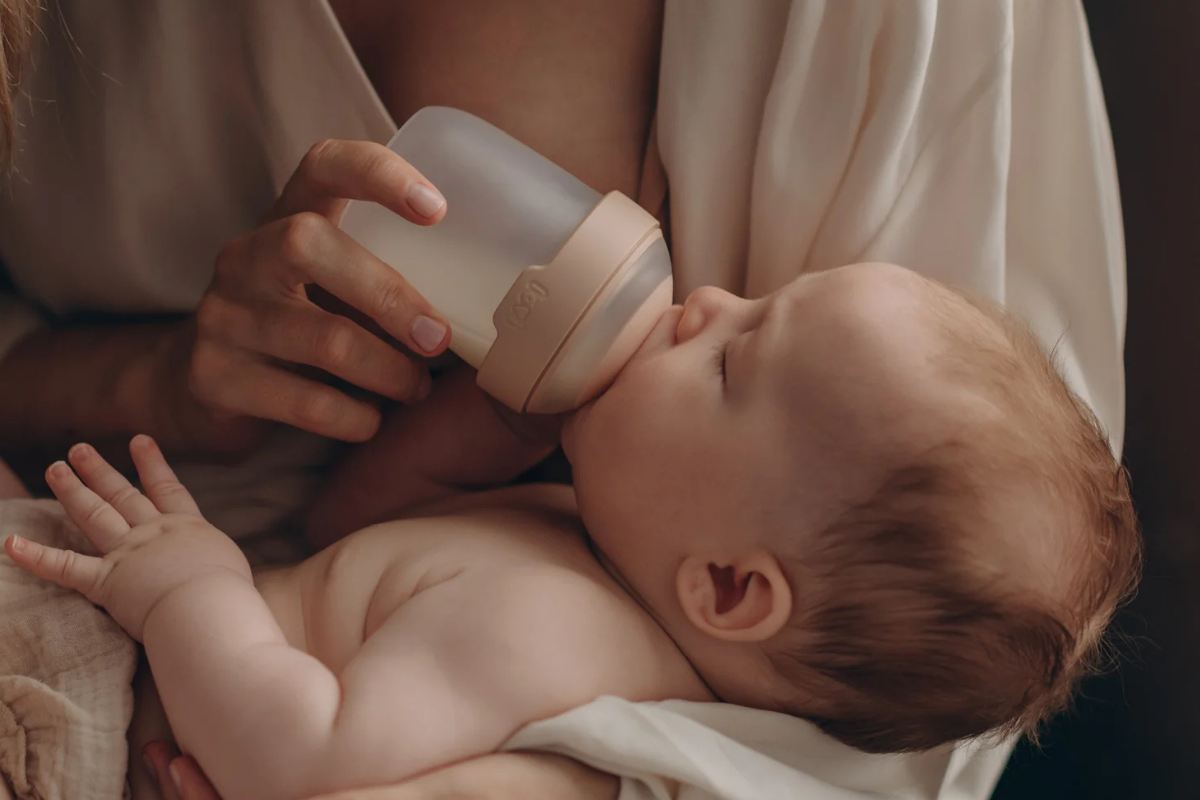
In short: Make up formula with water that is at least 70 °C (boil fresh water and leave it to cool for no more than 30 minutes), always add the water first and then measure the powder exactly as the manufacturer instructs. Feed responsively: when your baby shows hunger cues, in a semi-upright position, without forcing them to finish. Amounts vary from baby to baby.
Author: Eva Birsa, mum and co-founder of Evitas · Updated: 27 Sep 2026
Whether you formula feed partly or fully, it’s your choice. This guide summarises official NHS and WHO recommendations for safe preparation and bottle feeding.
How to make up formula step by step
- Clean the work surface and wash your hands thoroughly.
- Wash and sterilise bottles and teats before use.
- Fill the kettle with at least 1 litre of fresh tap water (not previously boiled) and boil it.
- Leave the water to cool for no more than 30 minutes so it stays at least 70 °C. Water this hot kills bacteria that may be in the powder (powdered formula is not sterile).
- Pour the correct amount of water into the bottle first, then add the powder.
- Use the scoop provided: fill it loosely and level it off. Don’t add more or less powder than the pack says.
- Put the lid on and shake until the powder dissolves.
- Cool the bottle under cold running water and test the temperature on the inside of your wrist: it should be body temperature, warm, not hot.
- Throw away any formula left after the feed.
Read more about bacteria in powder, storage and recalls in Formula safety: how to make up a baby bottle safely.
How much formula does a baby need?
There is no single amount for every baby. The NHS says newborns need quite small amounts to start with and that needs vary from baby to baby. The feeding table on your formula pack is a rough guide; your baby will show you how much they need. First infant formula can be their main drink throughout the first year, including after you start weaning at around 6 months. According to the NHS, switching to follow-on formula at 6 months has no proven benefits. Your health visitor or paediatrician can help you check your baby is getting enough (growth, weight, wet nappies).
Responsive bottle feeding
- Hunger cues: restlessness, turning the head and opening the mouth (rooting), sucking fists or fingers. Crying is a late sign of hunger.
- Position: hold your baby semi-upright with their head supported, and keep the bottle almost horizontal, slightly tipped.
- Pauses: take breaks during the feed and let your baby burp.
- Don’t force it: it’s fine if they don’t finish the bottle. Forcing can lead to overfeeding.
- Never unattended: never prop up a bottle and never leave your baby alone in bed with a bottle.
Warming and helpful kit
Never warm formula in a microwave: it heats unevenly and can scald your baby’s mouth. If you use a formula preparation machine, check that the water it dispenses is at least 70 °C when mixed with the powder. We describe one such machine in our Tommee Tippee Perfect Prep Pro article. Find bottles among our bottles with teats and sterilisers in sterilisers and bottle warmers. For how to sterilise bottles properly and warm milk safely, see our guide to sterilising baby bottles and bottle warmers.
FAQ
Why does the water need to be at least 70 °C?
Powdered formula is not sterile. Water at 70 °C or above kills bacteria such as Cronobacter sakazakii and salmonella.
Can I store made-up formula for later?
The safest option is to make each feed fresh. Always throw away leftovers. For storage, follow the WHO guidance summarised in our formula safety article.
What if my baby doesn’t finish the bottle?
That’s normal. Don’t force them; throw away what’s left.
When can my baby drink cows’ milk?
According to the NHS, whole or semi-skimmed pasteurised cows’ milk can become their main drink from 1 year.
When should I see a doctor?
If your baby isn’t gaining weight, has fewer wet nappies, vomits often, has been constipated for several days or has skin or tummy problems, speak to your paediatrician or GP. Discuss any change of formula with them too.
Sources
- NHS: How to make up baby formula
- NHS: Bottle feeding advice
- NHS: Types of formula
- WHO: Safe preparation, storage and handling of powdered infant formula
This content is for information only and does not replace advice from your paediatrician. If you have questions about feeding, talk to your paediatrician.



